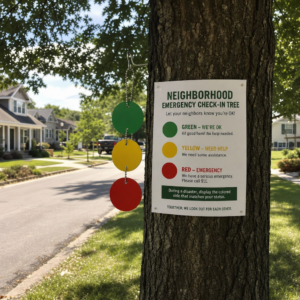
Storm season can test the strength of a neighborhood, but it can also reveal its heart. When winds rise, rain pounds, and power lines go dark, a simple plan made before the first cloud rolls in can become a powerful lifeline. A neighborhood emergency check-in tree helps people stay connected, share critical updates, and make sure no one is left unnoticed when conditions turn uncertain.
Build a Lifeline of Neighbors Before the Storm
A strong check-in tree begins with a shift in mindset: neighbors are not just people who live nearby, but part of a shared safety net. Before storm season arrives, start conversations with the people on your street, in your building, or along your block. Ask who might need extra help during an emergency, older adults, families with young children, people with disabilities, or anyone who may have limited access to transportation or communication tools. The goal is to turn casual familiarity into a reliable circle of care.
Once interest is growing, identify a few trusted coordinators who can help organize the tree. Think of these people as the roots and trunk of a living system, keeping information flowing. They do not need to be experts, only dependable and willing to stay calm under pressure. You can gather names, phone numbers, email addresses, preferred languages, and backup contacts, then map out who will check on whom. Keep the structure simple enough that anyone can understand it quickly, even during a stressful moment.
A good neighborhood check-in tree also includes a plan for multiple kinds of communication. Storms can knock out cell service, internet, and power, so rely on more than one method: text messages, phone calls, printed contact lists, door knocks when safe, and perhaps a shared meeting point. Decide ahead of time how often people should check in after a storm warning, and what to do if someone cannot be reached. A clear chain of contact turns uncertainty into action and gives every neighbor a role in the neighborhood’s resilience.
Set Up Your Check-In Tree for Safer Days Ahead
To build the tree, start with a simple structure: one primary coordinator at the top, several branch leaders beneath them, and a small group of neighbors assigned to each branch. For example, each branch leader could be responsible for contacting three to five households, who then pass the message along to others if needed. This keeps the process manageable and prevents one person from becoming overwhelmed. The beauty of the tree is its ripple effect, one message can travel outward quickly, carrying reassurance with it.
Next, create a written check-in script so that everyone knows exactly what to say. It can be as short as: “This is a storm check-in. Are you safe? Do you need help, supplies, or a welfare call?” Keep the wording friendly, clear, and consistent. Add instructions for what counts as urgent, such as loss of heat, injury, flooding, medical device needs, or no access to medication. When messages are standardized, neighbors can respond faster and pass along important details without confusion.
Finally, practice the tree before storm season is in full swing. A brief drill helps people learn their roles, test contact information, and spot weak points in the system. Update the list regularly, especially when families move, phone numbers change, or new neighbors arrive. Consider pairing the check-in tree with other preparedness habits, like stocking emergency kits and sharing local evacuation routes. With a little planning and a lot of neighborly care, your street can become more than a row of houses, it can become a community that knows how to stand together when the weather turns fierce.
A neighborhood emergency check-in tree is more than a plan; it is a promise. It says that during the loud and unpredictable hours of storm season, people will not drift apart into isolation and worry. Instead, they will reach out, listen, and hold one another steady, one call, one message, one knock at a time.
When neighbors prepare together, safety becomes a shared effort rather than a solitary burden. The storm may still come, but so will connection, readiness, and care. And in that spirit of unity, even the darkest weather can be met with a bright and determined human chain.