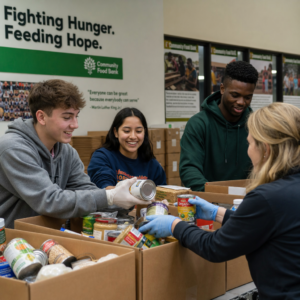
In every town and city, schools are more than places of learning, they are gathering places, launchpads, and lifelines. When colleges and high schools join forces with local food banks, they do more than fill shelves; they help build a community where students can thrive, families can breathe easier, and compassion becomes a daily practice. These partnerships can turn concern into action, and action into lasting change.
Joining Hands to Nourish Students and Communities
Colleges and high schools are uniquely positioned to become powerful allies in the fight against food insecurity. Students, faculty, staff, and families often live within the same neighborhoods served by local food banks, which makes collaboration both practical and deeply personal. Whether through food drives, volunteer days, or campus pantry programs, schools can help ensure that nutritious food reaches those who need it most, while also teaching young people the value of service and civic responsibility.
One of the strongest ways to partner is by creating regular collection efforts that align with the needs of the food bank. Schools can host themed drives, organize competition-based events between homerooms or residence halls, and encourage donations of high-need items such as canned proteins, pasta, rice, and shelf-stable milk. Beyond collecting food, students can volunteer to sort, pack, and distribute items, gaining firsthand insight into how hunger affects their own communities and learning that generosity is most powerful when it is consistent.
These partnerships also nourish the spirit of the school itself. When students see their campus making a visible difference, they begin to understand that leadership is not reserved for the future, it is something they can practice now. A high school club or college organization working side by side with a food bank can spark empathy, strengthen school pride, and create a culture where helping others becomes part of everyday life. In that shared effort, schools become not just centers of education, but anchors of hope.
Building Lasting Food Bank Partnerships Together
For partnerships to endure, they must be built on communication, trust, and mutual understanding. Schools should begin by meeting with local food bank leaders to learn about current needs, volunteer requirements, storage limitations, and the best ways to contribute. Rather than planning one-time events alone, colleges and high schools can work with food banks to design year-round support that matches seasonal demand, community programs, and emergency response needs. This approach transforms goodwill into reliable impact.
Lasting partnerships also grow stronger when they are woven into school culture. Teachers can connect food insecurity awareness to classroom lessons in social studies, economics, public health, or service learning. Student governments can adopt food bank support as a signature initiative, while athletic teams, arts programs, and academic clubs can each contribute in unique ways. Colleges might offer interns for logistics or communications support, while high schools can provide energetic volunteers and advocacy campaigns that raise awareness across the community.
The most inspiring partnerships are those that evolve with purpose. A school and a food bank might begin with a single food drive, then expand into regular volunteer shifts, campus pantry support, nutrition education events, or holiday meal distribution. Over time, these shared efforts can become traditions that students remember long after graduation. When schools and food banks grow together, they create something greater than a program, they build a resilient network of care that feeds both bodies and belonging.
Partnering with a local food bank is more than an act of charity; it is a declaration that every student and every neighbor deserves dignity, nourishment, and opportunity. Colleges and high schools have the energy, creativity, and heart to make these partnerships flourish. By joining hands with food banks, schools can help write a community story where kindness is practical, service is shared, and hope is always on the table.