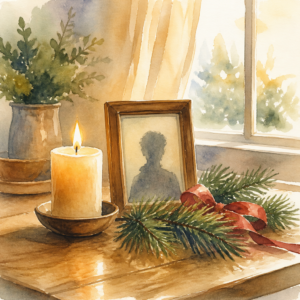
The holidays are supposed to be full of joy, which can make them especially painful after you've lost someone. The empty chair at the table, the ornament they made, the song on the radio, the family traditions that suddenly feel different: grief tends to show up loudest when everyone around you seems happiest.
If you're dreading Thanksgiving, Christmas, Hanukkah, New Year's, or any holiday this year, you're not alone, and there's nothing wrong with you. There's no right way to get through it. Here are gentle ideas that have helped many people, so you can choose what fits.
Before the holidays
1. Expect it to be hard, and let that be okay
Many people find that the days leading up to a holiday are harder than the day itself. Knowing that ahead of time can make it less of a shock. You don't have to feel festive, and you don't have to pretend for anyone.
2. Decide what you want to keep, change, or skip
You don't have to do everything the way you always have. Some people find comfort in keeping traditions exactly the same. Others need something completely different this year: a smaller gathering, a trip, a restaurant meal, or a quiet day at home. Ask yourself: What would feel comforting? What would feel like too much? It's okay to choose differently next year.
3. Tell people what you need
Friends and family often don't know what to say or do, so they say nothing. It helps to tell them plainly: "I'd like to come for dinner, but I might leave early." "Please say her name. I want to talk about her." "I can't host this year. Could someone else?"
4. Make a simple plan, with a way out
Decide ahead of time where you'll be, who you'll be with, and how you'll get home if you need to leave. Driving yourself or having a friend ready to go when you are can make a gathering much easier to face.
Ways to remember them
Many people find it helps to include their loved one in the holiday rather than trying not to think about them. A few ideas:
- Light a candle in their honor at the start of a meal.
- Set out a photo, or hang a special ornament or stocking in their memory.
- Cook their favorite dish or make their recipe.
- Ask everyone to share a favorite memory or a funny story.
- Write them a letter, and keep it or tuck it in a memory box. See The Unsent Letter.
- Donate to a cause they cared about, or buy a gift for someone in need in their name.
- Play their favorite music, or watch a movie they loved.
On the day itself
5. Give yourself permission
Permission to cry, to laugh, to leave early, to stay in bed, to skip the party, or to enjoy yourself without guilt. Feeling a moment of happiness doesn't mean you've forgotten them or that you love them any less.
6. Take breaks
If emotions build up, step outside for a few minutes, take a short walk, or find a quiet room. A few slow breaths can help: breathe in for a count of four, out for a count of six.
7. Be gentle with your body
Grief is exhausting. Try to eat something nourishing, get outside for a little daylight, and rest when you can. Be careful with alcohol. It can make feelings heavier and sleep worse.
8. Lean on someone
Ask one person you trust to check on you during the day, or plan a phone call with a friend who understands. If you'll be alone, plan something small and comforting, like a walk, a favorite meal, or a movie, and let someone know how you're doing.
If you're spending the holidays alone
Being alone can feel especially hard on a holiday. Some people find comfort in volunteering, such as serving a meal or delivering gifts. Others join a community dinner at a church or senior center, or simply plan a cozy day. Many hospices and grief centers hold holiday remembrance events that anyone can attend. See How to Deal With Loneliness for more ideas.
Helping children through it
Children grieve too, often in bursts. Keep some familiar routines, let them help choose how to remember the person, answer their questions simply and honestly, and let them know it's okay to have fun and okay to be sad.
Finding support
- Grief support groups: Many hospices offer free grief support to anyone in the community, not just families they served. Call a local hospice to ask. Churches, hospitals, and senior centers often host groups too.
- Talking to a counselor: If your grief feels stuck, overwhelming, or isn't easing at all over time, a grief counselor can help. See Mental Health Help for free and low-cost options.
- Journaling: Writing to your loved one or about your memories can help release what's hard to say. A guided grief journal can give you a place to start. See our guided grief journals.
If the holidays bring thoughts of not wanting to live, please reach out right away. In the US, call or text 988 any time, day or night. In an emergency, call 911.
If you're supporting someone who is grieving
Invite them, and make it easy to say no or leave early. Say their loved one's name and share a memory. Offer specific help, like shopping, cooking, or decorating. And keep checking in after the holidays are over, when the cards and calls usually stop. See How to Help a Grieving Friend.
More help
- How to Cope With Grief
- How to Practice Gratitude When Life Is Hard
- How to Help a Friend Who Is Going Through a Hard Time
- All Life Guides
Love doesn't end when someone dies, and neither does the bond. However you spend this season, be as kind to yourself as they would want you to be.