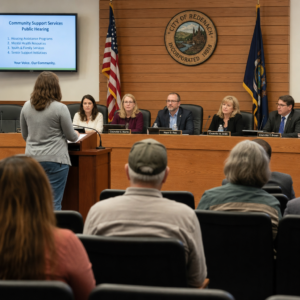
Cities are more than streets, buildings, and budgets, they are living communities made strong by the care people show one another. When support services are needed, whether for families, older adults, youth, newcomers, or neighbors facing hardship, local city councils can play a powerful role in shaping what help is available and how easily people can access it. Speaking to your council is not just about making a complaint or asking for funding; it is about helping decision-makers hear the heartbeat of the community and understand what support truly looks like on the ground.
Speak Up for Care: Your Council, Your Community
The first step in talking to your local city council is to remember that your voice matters. Council members are elected to represent the needs of the people who live in the city, and they often rely on residents to share firsthand experiences. If a community center is overbooked, if mental health support is hard to reach, or if after-school programs are missing in a neighborhood, these are not small details, they are signals. Speak clearly about what you have seen, what you have experienced, and why the issue matters to real people, not just in theory but in daily life.
Before meeting or writing to council, take time to gather your thoughts and support your message with simple, concrete examples. A powerful story can open hearts, but combining that story with facts makes it even stronger. You might share how many families are affected, what service gaps exist, or how a lack of support creates bigger costs later. Keep your message focused: explain the problem, describe who is impacted, and suggest what action you want council to take. This could be funding a program, expanding access, or partnering with local organizations that already do the work.
When you speak to council, confidence does not mean sounding perfect, it means sounding prepared and sincere. Whether you are giving a public comment, sending an email, or meeting with a council member, lead with respect and purpose. Use language that invites partnership: “Here is what our community needs,” or “This is how we can strengthen support together.” Council members may hear many voices, but a clear, compassionate message stands out. In local government, good ideas grow when people are brave enough to plant them.
Turn Local Voices into Support that Lasts
Real change begins when individual voices become a shared chorus. Reach out to neighbors, community groups, faith organizations, schools, and local nonprofits to build a wider picture of the need. A single voice can start the conversation, but a group of voices can show that the issue is not isolated. When many residents speak up in the same direction, council is more likely to see community support services not as a special request, but as an essential part of civic life.
It also helps to turn your conversation with council into an ongoing relationship, not a one-time visit. Follow up after meetings, thank members who listen, and keep them informed as the situation develops. If council makes a promise, ask how progress will be measured and when updates will be shared. This creates accountability and shows that residents are paying attention. Long-lasting support is built through steady care, persistent advocacy, and the willingness to return to the table when needed.
Most importantly, remember that asking for support services is an act of hope. It says that every child deserves a safe place to learn, every elder deserves dignity, every family deserves help in hard times, and every neighborhood deserves the chance to thrive. Talking to your city council is one way to turn concern into action and to shape a city that reflects compassion in policy, not only in words. When communities speak with courage and unity, they do more than request services, they help build a stronger, kinder future for everyone.
The path to better community support services often begins with a simple conversation, but that conversation can ripple outward into lasting change. By speaking with clarity, sharing real stories, and working alongside others, you help your local city council see what your community needs to grow and heal. In that shared space between citizen and council, hope becomes practical, and practical care becomes a legacy.