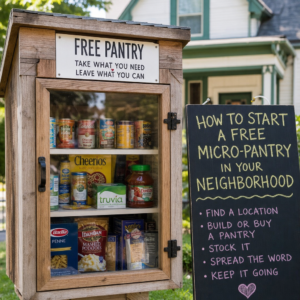
A free micro-pantry can begin as a simple act of kindness and grow into a quiet but powerful neighborhood lifeline. With a little planning, a small space, and a shared spirit of care, you can create a place where anyone can give what they can and take what they need. It is community support made visible: humble, practical, and deeply human.
Planting the Seeds of Community Care
The first step in starting a free micro-pantry is to gather people around the idea, not just the box. Talk to neighbors, local shop owners, faith groups, schools, and community leaders about the need in your area and the vision of a pantry that operates on trust and generosity. A micro-pantry works best when people feel it belongs to everyone, so invite them into the planning early and listen for ideas, concerns, and offers of support.
Next, define a few simple guidelines so the pantry can serve the community safely and respectfully. Decide what types of items you will accept, such as shelf-stable foods, hygiene products, baby supplies, or seasonal necessities, and post a clear sign explaining the purpose of the pantry: “Take what you need, leave what you can.” Keep the message welcoming rather than strict, because the heart of the project is dignity. A good micro-pantry is not a gatekeeper; it is an open hand.
Finally, find reliable helpers. Even a tiny pantry needs someone to check it regularly, clean it, restock it, and remove anything expired or damaged. Create a small rotation of volunteers so the responsibility does not rest on one person alone. When neighbors take turns tending the pantry, they are not just filling shelves, they are watering the roots of mutual care.
Turning Small Spaces into Hopeful Pantries
A micro-pantry does not need a large footprint; it only needs a safe, visible, and weather-resistant home. Many people build one from an old cabinet, a repurposed bookcase with doors, or a small wooden box mounted on a post. Place it somewhere easy to reach and easy to see, such as near a sidewalk, community garden, church, school, or front yard with permission. The ideal location is one where people can stop by without feeling watched or judged.
Once you have the structure, make it sturdy and inviting. Protect it from rain and pests, add a roof or sealant if needed, and ensure shelves are strong enough to hold cans, pasta, toiletries, and other essentials. Paint it in bright colors, add cheerful signs, or decorate it with local artwork so it feels like a neighborhood landmark rather than a forgotten container. A beautiful pantry sends a quiet message: this place matters, and so do the people who use it.
Then keep the pantry alive through steady care and community creativity. Share photos and updates on neighborhood groups, ask local businesses to host donation drives, and encourage people to contribute small items whenever they can. Over time, your micro-pantry may become more than a place to collect supplies, it can become a symbol of resilience, a reminder that generosity can fit inside a small box and still change a whole street. In that little space, hope learns how to stand on a shelf.
Starting a free micro-pantry is one of the simplest ways to turn compassion into daily action. It begins with a modest structure, a few thoughtful guidelines, and neighbors willing to care for one another in practical ways. When a community builds a pantry together, it builds something larger than storage, it builds trust, belonging, and hope.