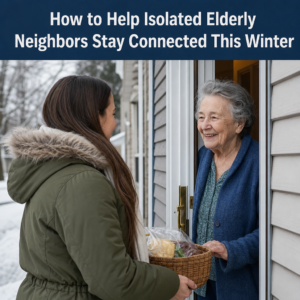
Winter can turn quiet streets into even quieter ones, especially for older neighbors who may already spend too much time alone. Shorter days, icy sidewalks, and holiday routines can make it harder to visit, call, or simply check in. Yet a small act of care, a warm message, a shared cup of tea, a quick snow shovel, or a friendly knock, can bring real light into someone’s season. Helping isolated elderly neighbors stay connected is not just kindness; it is a way of building a warmer, safer, more hopeful community.
Warm Hearts, Brighter Days for Winter Neighbors
The cold months often create invisible barriers between people. Snowbanks gather, plans get canceled, and even familiar faces can disappear behind closed doors. For older adults who live alone, winter may bring not only discomfort but also loneliness. That is why the simplest gestures matter so much: a hello from the sidewalk, a phone call after a storm, or a reminder that they are remembered can transform a silent day into one filled with comfort.
Connection does not always need to be grand or complicated. In fact, the most meaningful support often comes from consistency. A regular check-in every few days, a shared calendar of visits, or a standing “winter wellness call” can give an elderly neighbor something to look forward to. When people know they are not forgotten, their homes feel less isolated and their hearts feel a little lighter.
Communities shine brightest when neighbors become lifelines for one another. During winter, it helps to think beyond kindness as an event and see it as a habit. A porch light left on, an extra blanket offered, or a note slipped into a mailbox can carry more warmth than we realize. These small acts ripple outward, creating a season where older neighbors feel seen, valued, and connected to the life around them.
Simple Ways to Keep Elderly Friends Connected
Start with conversation, because connection often begins with a voice. A phone call, video chat, or even a brief voice message can help an older neighbor feel anchored to the world. If technology feels intimidating, offer to set up a simple device, write down clear instructions, or schedule calls at the same time each week. Familiar routines make communication easier and turn outreach into a comforting ritual.
Practical help can also open the door to social connection. Offer to pick up groceries, medicines, or winter essentials, and use those errands as moments to talk and check in. If weather allows, invite them for a safe, short visit or help arrange transportation to a community gathering, senior center, or worship service. When people can take part in everyday life, they are less likely to feel left behind by the season.
Finally, look for ways to build a small network around them. Ask nearby friends, family members, or volunteers to share the responsibility so the support is steady and not overwhelming. A neighborhood group chat, a meal train, or a rotating schedule of visits can make a big difference. Connection grows strongest when many hands help carry it, and in the heart of winter, that shared care becomes a shelter of human warmth.
Winter may be cold, but it does not have to be lonely. By offering time, attention, and steady kindness, we can help isolated elderly neighbors feel included in the rhythm of life around them. Every call made, every errand run, and every doorstep conversation becomes a spark against the dark. In these small acts, we do more than keep people connected, we remind them, and ourselves, that community is a warmth we create together.
More winter tips: Read our free guide, How to Stay Warm and Safe This Winter, or browse all Life Guides.