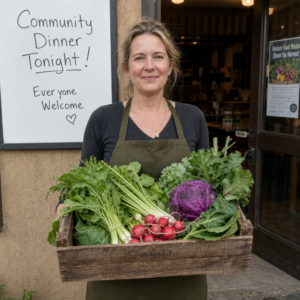
This is an illustrative story inspired by food rescue and community dinner projects in many towns. It isn't about one specific person, but every idea in it is something you can do.
In a town where front porches still matter and neighbors still wave from passing cars, one person’s small act of noticing grew into something far larger than a weekly habit. What began as extra fruits and vegetables left over from local markets became a beautiful rhythm of sharing, gathering, and belonging. This is the story of how surplus produce found new purpose, and how a single resident helped turn abundance into community.
From Surplus Baskets to Shared Tables
It started with baskets that would otherwise have gone unsold: bruised apples, slightly crooked carrots, a few extra greens still bright with life. Rather than seeing waste, one local resident saw possibility. With a borrowed cart, a few reusable crates, and a willingness to ask questions, they began collecting extra produce from nearby farms and grocers, rescuing food before it could be forgotten.
At first, the effort was modest, enough for a handful of neighbors, a few soup pots, and some impromptu recipe swaps. But word spread quickly, the way good news does in a close-knit place. Soon, the surplus baskets became a weekly invitation, and the shared table began to stretch wider than anyone expected. Families arrived with folding chairs, children carried napkins, and elders brought stories seasoned by memory and time.
The magic was never only in the food. It was in the transformation of “leftover” into “welcome,” of excess into care. Each dinner made the same quiet statement: there is enough, and there is room. Around those tables, the produce that once sat overlooked became the center of laughter, comfort, and connection, proving that abundance is richest when it is shared.
How One Neighbor Fed a Community Together
The resident behind the effort did not set out to become a hero. They simply noticed a need and chose to respond with consistency, humility, and heart. By coordinating pickups, organizing volunteers, and setting up long tables in parks, church halls, and community centers, they built something both practical and deeply human. Their neighbors did not just receive meals; they received an open door.
What made the dinners remarkable was how they invited participation rather than charity. One person chopped herbs, another set out water pitchers, another played music from a small speaker near the end of the room. The meals became communal in the truest sense, prepared by many hands, enjoyed by many lives. In the process, strangers became regulars, and regulars became friends who looked after one another beyond the dinner hour.
Over time, the gatherings changed the atmosphere of the whole neighborhood. People checked in more often, shared tools and rides, and noticed who might need help before being asked. The dinners planted a culture of generosity that reached beyond the plates. And at the center of it all was one neighbor who proved that feeding people can also feed trust, dignity, and hope.
In the end, the story of these community dinners is not really about surplus produce at all. It is about imagination, the kind that sees a box of extra peaches and envisions a circle of people laughing together beneath warm lights. It is about one resident who understood that kindness, when repeated, can become a cornerstone. And it is a reminder that sometimes the most nourishing thing we can offer is not just food, but the invitation to belong.
Start your own
- Connect with what exists. Your local food bank may already run a food rescue program and welcome volunteers, drivers, or extra produce.
- Ask growers and stores. Farmers markets, gardens, and grocers often have surplus they'd rather share than throw away.
- Follow food safety rules. Keep cold food cold, cook thoroughly, and check your local health department's rules for community meals.
- Find a home base. Churches, community centers, and parks are great places for shared dinners.
For more, see How to Cook and Distribute Meals for Homebound Seniors. If you need food yourself, see Free Food Help.
Want to grow your own? Read our free guide, How to Grow and Share Food, or browse all Life Guides.