Last updated: October 2026
Need food today? See Food Help: How to Get Free Food and Groceries for food pantries, free meals, SNAP, and WIC, or dial 211.
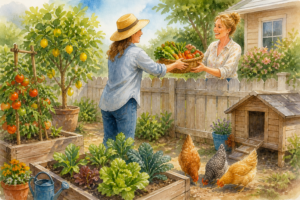
There's something hopeful about a tomato you grew yourself, a basket of lemons from your own tree, or eggs from hens who know your voice. Growing even a little of your own food can save money, get you outside, lift your mood, and connect you with neighbors. And almost every gardener ends up with more than they can eat, which makes sharing one of the happiest parts of it.
You don't need a farm or a big yard. A sunny balcony, a few pots, or a plot at a community garden is plenty to start. This guide covers how to begin, where to get free help, and how to share what you grow.
Start small: a first garden
- Find the sun. Most vegetables need at least six hours of direct sun a day. Watch your yard or balcony for a day and note where the light falls.
- Start with easy, generous plants. Lettuce, green beans, zucchini, cherry tomatoes, peppers, and herbs like basil, parsley, and mint are forgiving and productive. Zucchini and cherry tomatoes almost always give you extra to share.
- Use containers or raised beds if your soil is poor, you rent, or bending is hard. A large pot or a waist-high raised bed makes gardening easier on your back and knees.
- Plant for your season. Cool-weather crops like lettuce, peas, and greens do best in spring and fall. Heat lovers like tomatoes and squash go in after the last frost.
- Water deeply and mulch. A few deep waterings a week are better than a daily sprinkle, and a layer of mulch keeps soil moist and weeds down.
Free help for gardeners
- Your local Cooperative Extension office (usually part of your state university) offers free advice on what grows well where you live, soil testing, and answers to garden questions. Many have Master Gardener volunteers you can call or email. Search for your county's name plus "extension office."
- Seed libraries at many public libraries let you take free seeds and bring some back at the end of the season.
- SNAP can buy seeds and food-producing plants. If you get SNAP (CalFresh in California), you can use your EBT card for vegetable seeds and plants that grow food at stores that accept it.
- Neighbors and garden clubs often share cuttings, extra seedlings, and tools. Ask around, or post on a neighborhood board. See our Neighbors Helping Neighbors Skill-Swap Board.
Community gardens
A community garden is a shared space where neighbors each tend a small plot, or work together on one big garden. They're perfect if you don't have a yard, and they come with something a backyard can't offer: other gardeners to learn from and laugh with.
- Finding one: Ask your city parks department, local library, extension office, churches, schools, and senior or community centers. Many apartment complexes and retirement communities have garden plots too. Plot fees are usually low, and some gardens waive them for people who can't pay.
- Waiting lists are common, so sign up early. In the meantime, ask if the garden needs volunteers. It's a great way to learn and meet people.
- Starting one: Gather a few interested neighbors, find a sunny spot with access to water, and get written permission from the landowner, such as a church, school, city, or business. Your extension office and parks department can often help with soil, tools, and rules.
Fruit trees for shade and harvest
A fruit tree is a gift that keeps giving for decades: shade that cools your home in summer, blossoms in spring, a place for birds, and fruit to eat and share. Planting one is also a lovely way to honor someone or celebrate a new chapter.
- Choose trees that suit your climate. Citrus, figs, and avocados love warm places. Apples, pears, and cherries need some winter cold. Your extension office or a local nursery can tell you which varieties do best where you live.
- Short on space? Dwarf and semi-dwarf trees stay small enough for a modest yard, and many grow happily in large pots on a patio.
- Check pollination. Some fruit trees need a second tree of a compatible variety nearby to produce fruit. Ask before you buy.
- Plant for shade wisely. A tree on the south or west side of a home blocks the hottest sun. Leave plenty of room from the house, sidewalks, and power lines for the tree's full size, and call 811 before you dig so buried utility lines can be marked for free.
- Be patient. Most young fruit trees take a few years to bear a real crop. Water them regularly while they get established.
- Look for free or low-cost trees. Many cities, utility companies, and nonprofits give away shade or fruit trees each year. Ask your city or utility company.
Backyard chickens
A few hens can give you fresh eggs, eat kitchen scraps, add rich compost to your garden, and turn out to be surprisingly funny companions. Before you bring any home, a little planning goes a long way.
- Check the rules first. Many cities allow a small number of hens but not roosters, and some HOAs and communities don't allow chickens at all. Call your city or county and check any HOA rules before you buy.
- Start with a few. Chickens are social, so plan on at least three. A healthy hen typically lays several eggs a week for a few years, then lays less as she ages, though she may live many years more.
- Give them a safe home. Hens need a sturdy coop that's dry, well ventilated, and locked up tight at night. Raccoons, coyotes, foxes, hawks, and even neighborhood dogs are real threats.
- Plan for daily care. Fresh water and feed every day, collecting eggs, and cleaning the coop regularly. Arrange a helper for when you travel.
- Keep it healthy. Backyard poultry can carry germs like Salmonella even when they look healthy. Wash your hands after touching chickens, eggs, or anything in their area, keep chickens out of the house, and don't kiss or snuggle them, as the CDC advises. To protect your flock from bird flu, keep wild birds away from their food and water, and call your vet or state agriculture department if birds get sick or die suddenly.
- Think about adopting. Some animal shelters and rescues take in chickens that need new homes.
Share the harvest
The best part of growing food may be giving it away. A bag of tomatoes on a neighbor's porch, a dozen eggs for the family down the street, or a box of oranges for the food pantry can mean a lot, especially to someone who can't afford fresh produce.
- Donate to a food pantry. Many pantries welcome fresh produce. AmpleHarvest.org is a free directory that shows which pantries near you accept garden produce and when to drop it off. Call ahead about eggs, since rules for donating them vary.
- Plant a row to share. Set aside one row or one plant just for giving.
- Set up a share table or box by your driveway, at church, or in a building lobby with a "Free, please take" sign. A little free pantry can hold produce too.
- Offer your extra fruit. If your tree makes more than you can use, invite neighbors to pick, or look for a local gleaning or fruit-rescue group that harvests backyard trees and shares the fruit with people in need.
- Host a swap or a shared meal. Trade zucchini for eggs, or turn the extras into a neighborhood dinner. See From Extra Produce to Community Dinners.
- Think of who might need it most: a senior who can't get to the store, a new parent, a family going through a hard time, or a neighbor who lives alone. A visit with a basket of produce is a gift and a check-in in one.
More than food
Gardening is gentle exercise, time in fresh air and sunshine, and a quiet break from worry. It gives each day a small purpose, and it's a natural way to make friends. If you're looking for ways to feel more connected or to fill your days after retirement, a garden plot or a few hens might be just the thing. See How to Start Exercising at Any Age, How to Make Friends as an Adult, and How to Find Purpose After Retirement.
More help
- Food Help: How to Get Free Food and Groceries
- How to Start a Community Food Pantry or Free Library
- How to Start Volunteering
- All Life Guides
Every seed is a small act of faith in the future. Every basket you share is a chance for someone else.